Politics
President Trump Working on a 10-Point Peace Plan With Iran to End War, Could Take Years to Finalize
Trump’s Iran peace deal could end conflict, lower oil prices, boost markets, and reshape global power—though nuclear tensions remain a major hurdle.


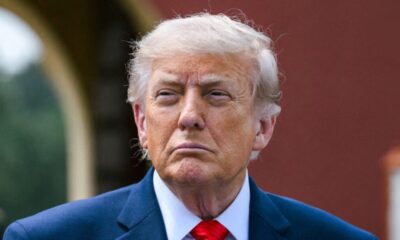
Master negotiator President Donald Trump is hammering out a 10-point peace plan with Iran to end America’s war against the brutal Islamic-led regime — and the proposed deal with the devil is poised to deliver a $1 trillion windfall for the U.S., lower oil prices, send stocks soaring and set our nation on a road to even greater prosperity, sources say.

Trump announced that Iran has agreed to a two-week ceasefire as both nations hash out the exact details of the agreement.
But sources warn the complex arrangement could take years to officially finalize.
“Trump is the ultimate negotiator. He’s so much smarter than these people, and he’ll say things to put them off or what we call psychological operations [PSYOPs], which he is a master at. He’ll threaten them and say, ‘We are going to do this and that,’” explains retired Army Maj. Gen. Paul Vallely.
“He threw a lot of stuff out there to put fear in the Iranian regime. That works for the most part. We are watching them very closely, and at the same time our military can rest a little bit.”

Experts say one key point in the talks is Iran maintaining control over the Strait of Hormuz, the narrow sea passage in the Middle East through which ships transport 20 percent of the world’s oil.
According to sources, the proposal states ships must notify intermediary companies linked to the Islamic Revolutionary Guard Corps of their cargo, destination and owner — and cough up tolls of at least $1 million per vessel payable in Chinese yuan or the cryptocurrency Bitcoin.
Trump has crowed about a possible “joint venture” with Iran regarding the hefty tolls, calling such an arrangement a “beautiful thing,” ABC correspondent Jonathan Karl claimed on X.
Sources suggest the cash-spinning deal could reimburse America for the expenses it incurs defending global democracy and promoting world peace.
Vallely says, “Nobody else is putting up the money like we are to make sure [the strait remains] open and safe, so why shouldn’t we get paid some money back for a period of time?”

In addition to control of the vital waterway, the terms reportedly include an ongoing commitment to nonaggression; the lifting of primary and secondary sanctions against Iran; the termination of all United Nations Security Council and International Atomic Energy Agency board of governors resolutions against the Middle Eastern nation; the withdrawal of U.S. combat forces from the region; and the cessation of war on all fronts, including American ally Israel’s attacks on Lebanon.
Iran is also holding out for payment of damages to rebuild its war-torn country as America’s military might has brought it to its knees.

“The Iranian regime, which is the number one state sponsor of terrorism, has been significantly weakened and degraded by U.S. and Israeli actions, and that is a good thing for the civility of the region and the world,” notes renowned foreign relations expert Michael Szanto.
But experts warn the deal’s stumbling block could be Iran’s quest to preserve its nuclear program — and Trump’s steadfast refusal to allow America’s enemy to develop a dangerous and deadly nuke stockpile.
“That is the sticking point, and it WILL be the sticking point,” says Szanto.
In fact, some fear without Trump’s agreement to a deal, nuclear war is inevitable.

Still, financial markets responded favorably to the negotiation news — with the Dow Jones Industrial Average spiking 2.9 percent on April 8, while the NASDAQ jumped 3.5 percent and the S&P 500 rose 2.5 percent, according to The Hill.
On the same day, oil prices also plunged as the U.S. benchmark West Texas Intermediate dropped to $93 per barrel and the global benchmark Brent crude fell to $92 per barrel, down from nearly $115 the previous day.

But Szanto suggests America is holding the winning hand.
“There is a lot of misplaced hubris with the Iranian government,” he observes. “I feel they are kind of in denial of how much they’ve been set back.”