News
Uniting for De-Extinction: How Colossal Biosciences Builds Bridges Across Science

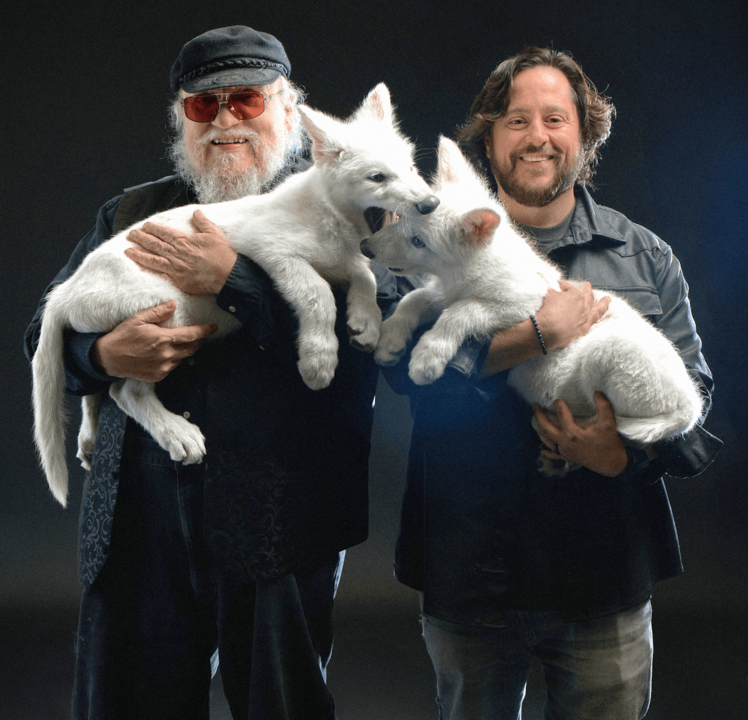
What are scientists debating now? The same thing they always have: new ideas. From the dawn of scientific progress, breakthroughs have sparked both excitement and opposition. Today’s battleground is de-extinction.
At the forefront of this controversy is Colossal Biosciences, a Texas-based company pioneering the science of bringing back extinct species. Like all trailblazers, Colossal has gained unexpected allies and faced resistance from surprising corners.
“Listen, anytime you challenge the status quo, you’re going to be met with people who don’t believe in you and what you are doing,” said Colossal Biosciences CEO Ben Lamm in a recent interview. “But you are also going to find allies who are staunch supporters. Our community extends from the United States to Australia, from Harvard to Stanford, from the government to school children. It’s incredible.”
In this sit down interview, he shared his thoughts on what he and his team are doing to encourage collaboration and what might they are going to do in the coming years to win over those who criticize.
Where have you found the most support for the de-extinction mission?
Our support comes from an incredibly diverse range of people and organizations. We’ve found backing not only in traditional scientific hubs like Boston and Silicon Valley but also in rural communities, global conservation groups, and educational institutions. Governments, private foundations, and even school children have reached out. It’s inspiring to see how universal the fascination with de-extinction is. People see the value in biodiversity restoration, the potential to combat climate change, and the sheer wonder of pushing the boundaries of science.
What about that surprised you?
The breadth and depth of support have been astounding. What really surprised me is the number of younger people engaging with our mission. Kids are writing letters, teachers are incorporating our work into their lessons, and we’ve had Zoom calls with classrooms full of students who want to know how they can help save the planet. This shows me that what we’re doing isn’t just scientific—it’s cultural. We’re inspiring the next generation of problem-solvers and I think what we are seeing is that those kids are very aware of what the world needs and they want to get on board with saving it.
Who are the detractors from Colossal?
Critics come from several camps. Some are scientists who feel our focus on de-extinction diverts attention and funding from conservation efforts for endangered species. Others are ethicists who raise concerns about playing “god” with nature. There’s also skepticism from those who think the idea is simply too ambitious or believe that the resources could be better allocated to different areas. We think they are wrong but we recognize that it is comfortable for them to sit in their place of privilege and critique. We’d much rather the criticism came from those who are actually coming up with alternative systems-based solutions to the problem. But, we can’t seem to find those folks anywhere. That’s the bigger problem.
What do you think is driving their criticism?
I think most of the criticism boils down to fear of the unknown. De-extinction challenges fundamental ideas about life, ecosystems, and humanity’s role in shaping the future. It’s a bold and unprecedented science, and that makes people uneasy. There’s also an understandable concern about whether the benefits we project will align with real-world outcomes. That’s why transparency and collaboration are so vital for us.
What is the company doing to help win over the critics?
We’re focused on collaboration and data-sharing. We’ve partnered with conservationists, geneticists, and ethicists to ensure our work is rooted in ecological benefits, not just scientific breakthroughs. Our initiatives include publishing research, engaging with local communities, and contributing to the preservation of endangered species. We’re not here to replace conservation but to amplify it. That’s a message we’re working hard to communicate.
What is going to change in the days and years ahead that you think will help bring over dissenters to your side?
The proof is in the results. As we advance in rewilding efforts and demonstrate the positive ecological impacts, critics will see the tangible benefits of our work. For example, when a restored ecosystem proves more resilient to climate change or when a de-extinct species contributes to biodiversity in meaningful ways, people will start to see the proof. Science evolves through demonstration, and our focus is on delivering real-world, measurable outcomes. It take time but with the announcement of our dire wolf and woolly mouse, we are proving that we are WELL on the way.
What role do you see Colossal playing in shaping public perception of genetic engineering and biotechnology?
Colossal has the unique opportunity—and responsibility—to be a bridge between cutting-edge science and the broader public. Genetic engineering and biotechnology are often misunderstood, sometimes painted as futuristic or even dystopian, but we see them as tools for solving real-world problems. By demonstrating how these technologies can restore ecosystems, combat climate change, and even preserve endangered species, we’re reframing the narrative.
Our approach prioritizes transparency, education, and storytelling. We want people to see that this isn’t about playing God; it’s about leveraging science to address some of the most pressing challenges of our time. When people understand the tangible benefits of this work they begin to appreciate its potential. It’s about showing that technology, when applied thoughtfully and responsibly, can be a force for good.
How do you envision collaboration with governments, NGOs, and other organizations in the next decade?
Collaboration is at the heart of what we do. No single entity—whether it’s a company, a government, or an NGO—can solve the challenges facing our planet alone. Over the next decade, I see Colossal deepening its partnerships with organizations across the spectrum. Governments will become our customers while NGOs will help to amplify our work by connecting local expertise, on-the-ground networks, and advocacy for these projects.
Together, we can build ecosystems that are not only biologically diverse but also resilient to the pressures of climate change and human activity. We’re already laying the groundwork for collaboration on rewilding projects, biodiversity preservation, and using de-extinct species as a tool for ecological repair. As our work progresses, the synergies will become even more impactful. At its core, this is a team effort—one where shared goals and mutual respect drive results.