News
Researchers Believe They Solved the Mystery Behind the Lost Colony of Roanoke After More Than 400 Years


One of the most confounding mysteries from the early days of this nation has finally been solved after 435 years — researchers say they have located the so-called Lost Colony of Roanoke.
The Lost Colony refers to the 118 Londoners sponsored by Sir Walter Raleigh who in 1587 settled on the island of Roanoke in North Carolina. Within only three years, all the colonists — the very first settlers in the New World — disappeared without a trace, Fox News Digital reports.
The only clue they left behind was the word “Croatoan” carved on a tree — which was believed to refer to Croatoan Island, a barrier isle off the North Carolina coast now known as Hatteras.
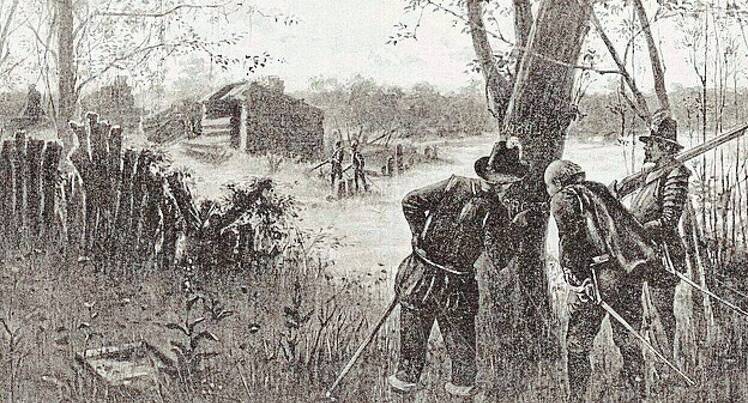
Bad weather prevented John White, the colony’s returning governor, from searching for his people before having to return to England. The missing included his daughter Eleanor Dare and granddaughter Virginia Dare.
For centuries, historians wondered whatever happened to the clan, who was never seen again. Did they make it to their destination? Were they wiped out by war, famine or illness?
Now, researchers have uncovered from a deep sub-stratum of a trash heap on Hatteras Island flaky bits of iron filings called hammerscale, which contain iron forging byproducts — which English colonists would have known how to work with, while American Indians wouldn’t have had a clue.

The finding of hammerscale suggests that the Lost Colony did make it to their destination, where they assimilated with the Native Americans.
“The key significance of hammerscale … is that it’s evidence of ironworking, of forging, at that moment,” says Mark Horton, an archaeology professor at Royal Agricultural University in the U.K. “Hammerscale is what comes off a blacksmith’s forge … This is metal that has to be raised to a relatively high temperature … which, of course, [requires] technology that Native Americans at this period did not have.”

Horton says this proves English colonists were there, doing the ironwork only they knew how to do.
Today’s researchers say that in addition to the hammerscale, they dug up guns, nautical fittings, small cannonballs and other items only the settlers would likely have had.
This hard evidence meshes with writings from the 1700s that described “people with blue or gray eyes who could remember people who used to be able to read from books.”