Exclusive
Ghislaine Maxwell Believes DOJ is Withholding Jeffrey Epstein Documents That Could Prove Her Innocence

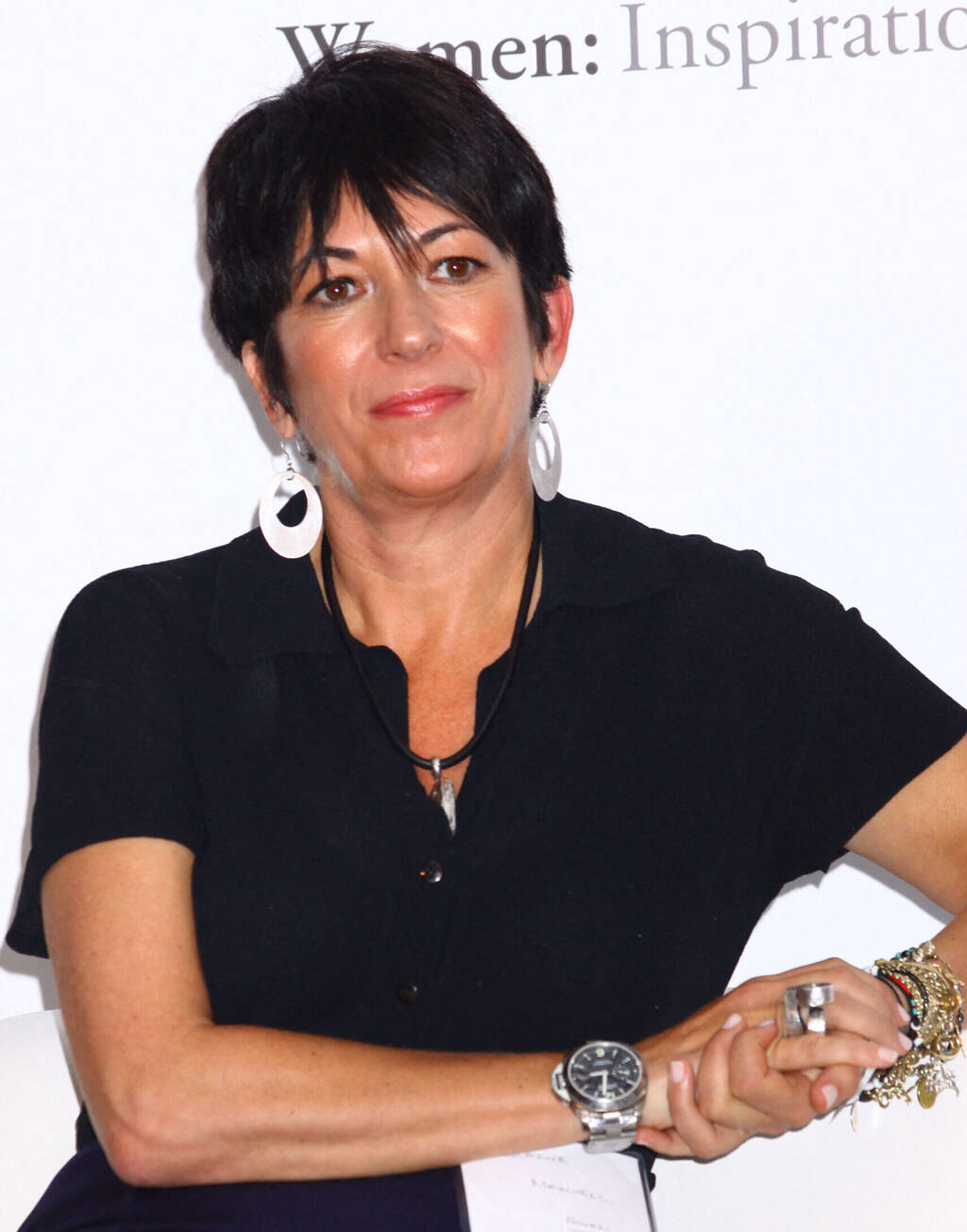
Jeffrey Epstein‘s former associate Ghislaine Maxwell is not giving up her bid for freedom and recently filed court documents asking a federal court judge to reconsider the decision to reject her habeas corpus because she didn’t have all the top-secret government documents to establish a proper appeal.
The unprecedented court filing exclusively obtained by the National Enquirer argues that as a prisoner she did not have easy access to the millions of pages recently released by the U.S. Justice Department detailing the late convicted pedophile’s operation. According to her filing, Maxwell, 64, believes the government is also withholding thousands of additional files.
The former British socialite believes the hidden files can prove her innocence and challenge the prosecutor’s case that led her 2021 sex trafficking conviction and 20-year prison sentence.
“If the newly released material shows that the trial record was incomplete, that key evidence was withheld or lost, and that the prosecution’s account rests on a chronology the documents no longer support, then the conviction cannot responsibly be treated as final,” her family says in a five-page statement seeking to reopen her case.
“Ghislaine is asking the Court to alter or amend its judgment, not to revisit an unchanged record.”

Maxwell has long claimed in court a group of 25 “untouchable” men made “secret settlements” with victims while she remains the only Epstein associate prosecuted in the United States, per the New York Post.
In August, her habeas petition was rejected by U.S. District Court Judge Paul A. Engelmayer, who called the appeal “patently frivolous” and “demonstrably meritless” containing “outright falsehoods,” in a 67-page opinion.
But Maxwell immediately pushed back, filing court papers arguing her legal team didn’t get a chance to review all the exculpatory evidence in violation of the Brady rule that requires prosecutors to hand over all material favorable to the defense.
Maxwell, for example, cites a trove of investigative files the state of New Mexico handed over to the feds following a probe into Epstein’s Zorro Ranch outside Santa Fe, which she claims shows a major discrepancy in a witness’s testimony.

In her filing, she argues one of the witnesses who testified against her claims she was abused in New Mexico, but the records show Zorro Ranch residence was still under construction at the time of the alleged incident.
“If the Government affirmatively presented a later residence as the site of an earlier event, the discrepancy bears on the age, credibility, of the witnesses at the relevant time and due process,” Maxwell argues.